A plan built around the room, not only the patch
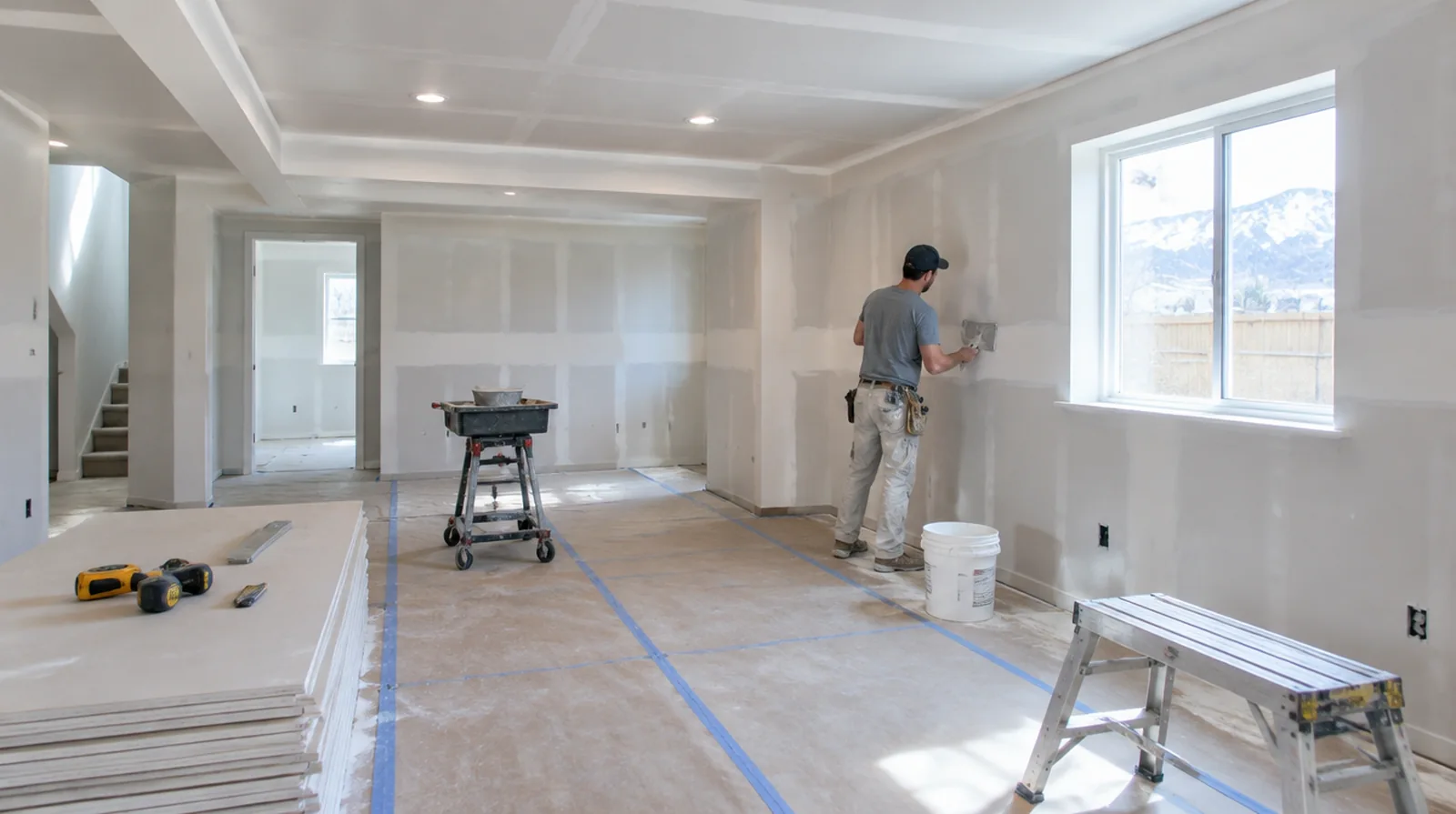
Good preparation is what allows a drywall finish to stay in the background of a completed room. For basement finishing in West Jordan, West Jordan Drywall Company explains the relationship between damaged panels, joint treatment and the later paint system. Look beyond the outline of a blemish when deciding the repair scope. The surrounding board must be sound, its supports must be adequate and any known water source must already be addressed. The final lighting and decorative sheen also influence how extensive the finishing should be. Putting those decisions together provides a more useful starting point than selecting a service solely from the visible size of a hole.
Texture Matching: identify the existing pattern
First determine how the current texture creates its pattern and relief. Examine the surface in the light the space actually receives before choosing a spray or hand applied method. For this part of the project, make sure their protection, surface finish and disposal allowances describe equivalent work before comparing the final prices. See the texture matching guide for the scope questions, preparation stages and finishing decisions specific to that work.
Commercial Drywall: plan material movement
Long corridors, shared lifts and limited storage can affect sheet sizes and delivery timing. The material handling plan should protect common spaces as well as the space where installation occurs. For this part of the project, describe the remaining decorative preparation clearly so another contractor can price that stage accurately. See the commercial drywall guide for the scope questions, preparation stages and finishing decisions specific to that work.
Water Damage Drywall Repair: keep contamination separate
Suspected microbial contamination or exposure to flood water is outside a routine cosmetic patch assessment. Ask an suitable remediation professional about containment and material handling before drywall work is scheduled. For this part of the project, share information about previous repair methods so the next assessment can consider why they did not last. See the water damage drywall repair guide for the scope questions, preparation stages and finishing decisions specific to that work.
Drywall Installation: select appropriate panels
Panel thickness and type depend on the intended wall or ceiling assembly and the conditions in the interior. Moisture resistant board is not a substitute for a required waterproofing system in a wet area. For this part of the project, assign removal and reinstatement duties for the affected devices before repair access is needed. See the drywall installation guide for the scope questions, preparation stages and finishing decisions specific to that work.
Soundproof Drywall: explain verification limits
A construction proposal is not the same as a field measured acoustic performance report. If a particular rating is required, discuss suitable design input and testing with an acoustic professional. For this part of the project, ask what happens during each stage and when the interior needs to remain undisturbed between coats. See the soundproof drywall guide for the scope questions, preparation stages and finishing decisions specific to that work.
Drywall Finishing: use controlled sanding
Sanding should refine small tool marks rather than grind away a badly shaped joint. Dust extraction and protection matter even for a room with only a few seams. For this part of the project, agree on protective coverings and check that tools and material handling will not damage the noticeable finish. See the drywall finishing guide for the scope questions, preparation stages and finishing decisions specific to that work.
Skim Coating: apply controlled thin layers
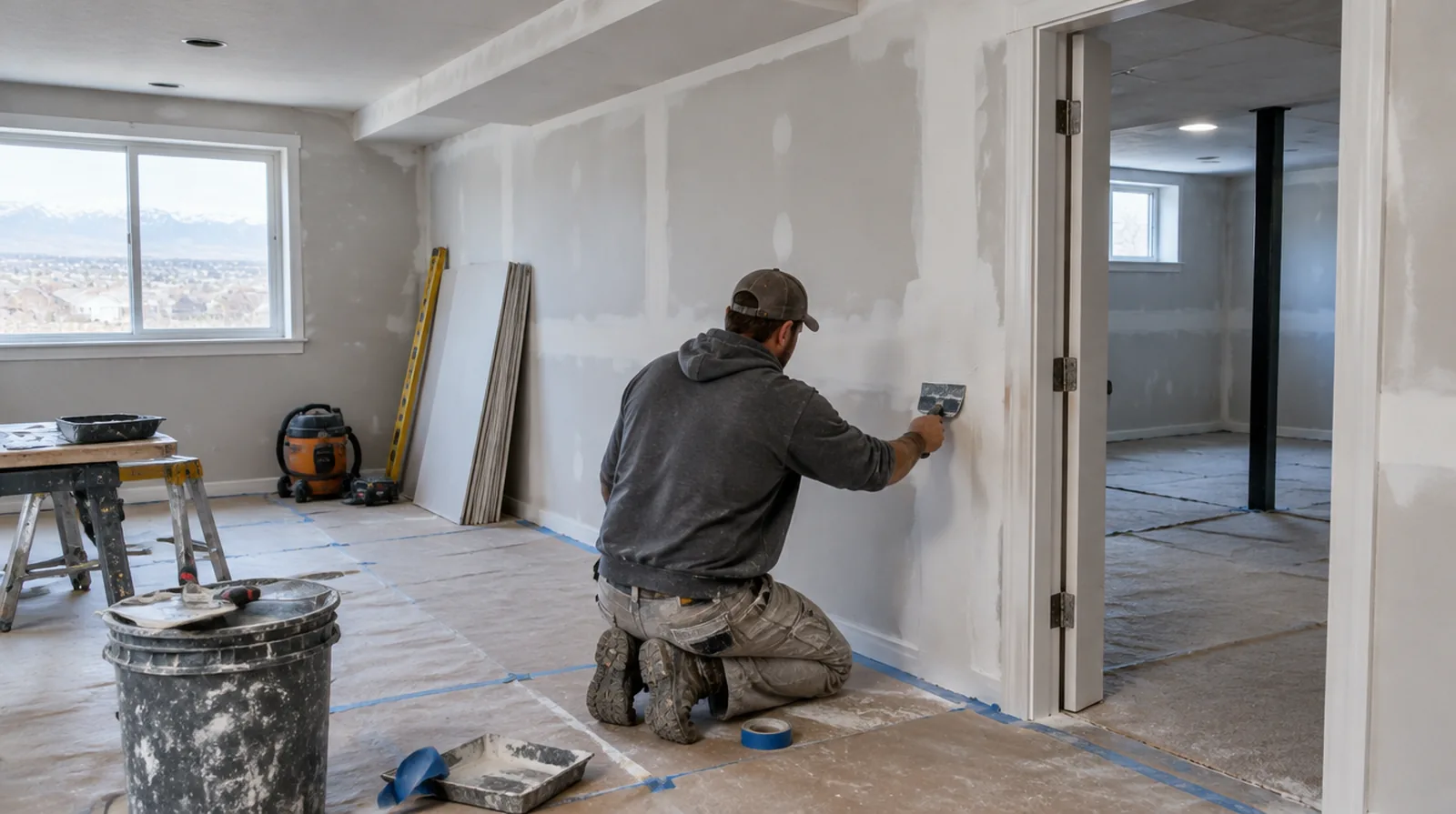
A skim coat is intended to refine the surface rather than build a heavy unsupported layer. Deeper texture may require successive passes to level low spots without overloading the high points. For this part of the project, decide whether trim stays in position or is removed before agreeing how the new surface meets that edge. See the skim coating guide for the scope questions, preparation stages and finishing decisions specific to that work.
Popcorn Ceiling Removal: protect the entire room
Overhead coating removal can distribute debris throughout the space unless protection is comprehensive. Arrange masking, furniture relocation and a suitable removal route rather than covering only a small patch below. For this part of the project, identify the purpose of each stage and the intervals during which finishing material needs to remain undisturbed. See the popcorn ceiling removal guide for the scope questions, preparation stages and finishing decisions specific to that work.
Drywall Repair: build thin finishing coats
Several controlled applications are normally easier to flatten than one deep deposit of finishing compound. Each layer needs sufficient drying interval before the next pass can be judged accurately. For this part of the project, establish how additional findings and any proposed removal will be recorded before the scope changes. See the drywall repair guide for the scope questions, preparation stages and finishing decisions specific to that work.
Ceiling Repair: address isolated stains
A dry repaired ceiling may still need a compatible stain blocking primer before decorative paint. Establish that the source is no longer active instead of treating primer as a remedy for damp material. For this part of the project, arrange protection and a delivery route that do not unnecessarily obstruct other occupants. See the ceiling repair guide for the scope questions, preparation stages and finishing decisions specific to that work.
Access and drying conditions in West Jordan
Every basement finishing has practical constraints. Discuss basement stair turns and window wells while the rooms can still be assessed together. In a place with dry air with cold snowy winters, the conditions inside the work area matter more than an assumed drying schedule. Heating or cooling, airflow and the number of wet finishing coats can all influence when the surface is ready for the next stage. For a project focused on finishing a basement before carpet goes in, leave enough time to verify the underlying condition before covering it. Keeping one room usable may require a staged plan, while an empty property may allow broader protection and more direct material movement.
Compare the same finishing boundary
A meaningful comparison starts with what each proposal actually includes. Ask where damaged material will be removed, what remains in place, how the replacement is supported and what finish is expected before paint. Then check the edges of the scope: protection, disposal, primer, decorative coatings and the handling of fixtures. Those details can explain a price difference that the size of the patch alone does not. If hidden damage is discovered, agree how it will be assessed and documented before more work goes ahead. Clear boundaries are useful for a single room repair and just as important for a larger interior remodel.
Arrange the information before the next step
The assessment is easier to organize when basic room details are ready beforehand. Record the approximate area, the height of overhead work and the material route into the property. Take an overall image and a close view without scraping or removing a coating that has not been assessed for safe disturbance. Note any leak history, recurring cracks or former repair attempts. Tell the finisher how the room will be decorated and used afterward. The contact information page includes a city level map and the business address. A connected project form is available; the displayed telephone remains a preview placeholder.
Read about the project approach or view contact and planning details.
More planning details for West Jordan
West Jordan basements are a common place for new drywall, from family rooms to extra bedrooms. Before boards go up, confirm that framing, insulation and any egress window work have been inspected where required. Window wells and stair turns limit how full sheets come down, so measure the path first.